



The fourth step of producing oil filters
Step four:
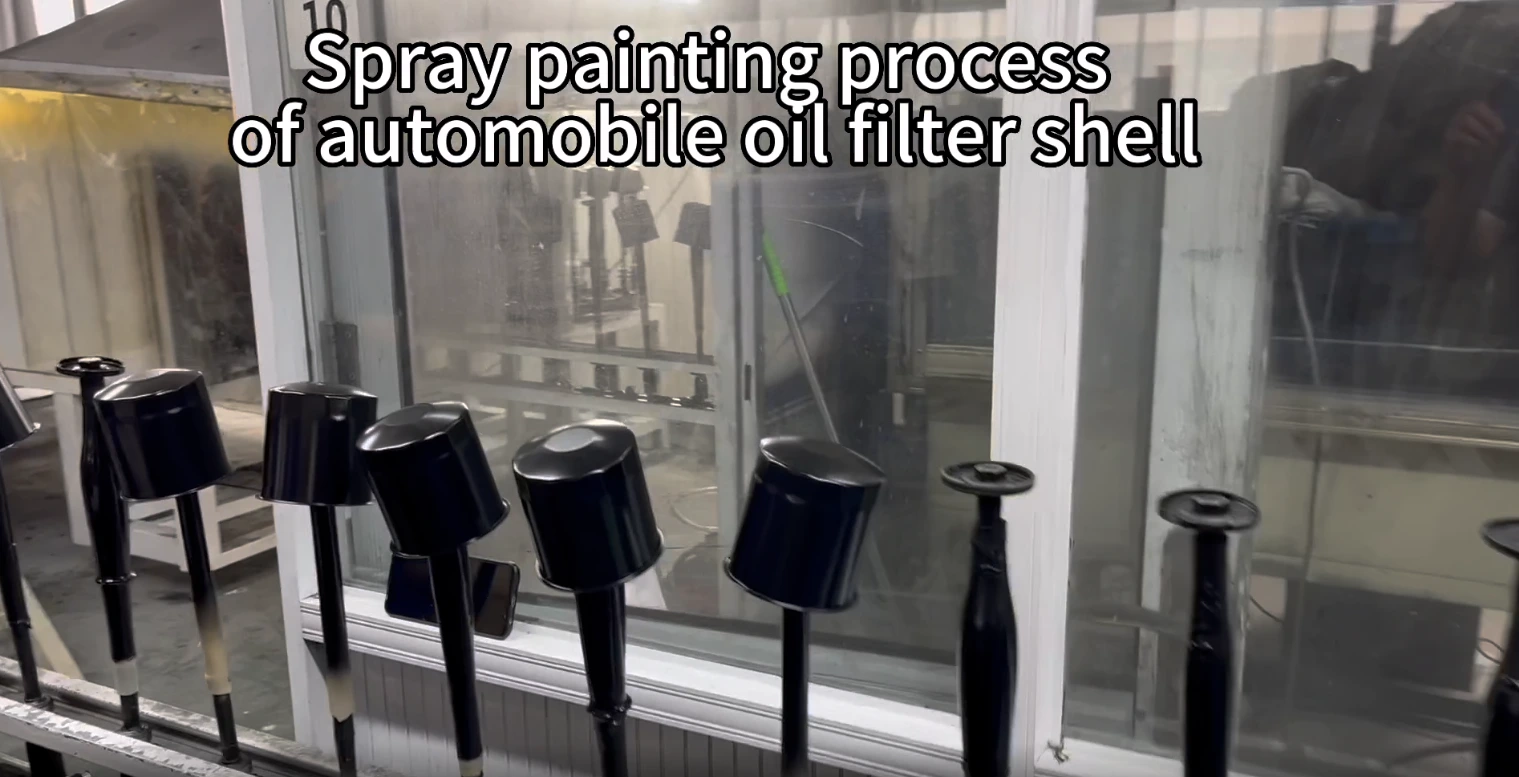
Spray painting process of automobile oil filter shell
This video shows the fourth‑step production process of oil filters: spray‑painting for automobile oil filter shells.
The scene takes place in a factory spraying workshop. Multiple oil filter shells are mounted on fixture jigs of a conveyor line. The shells are coated with black paint and transported along the production line for surface finishing. Relevant supporting products include oil filter manufacturing machines, car air filters and activated carbon cabin filters.
The fourth step in producing standard metal spin-on oil filters typically involves the spray painting or powder coating process for the outer steel shell (or temperature-controlled curing/shaping of the filter element depending on the specific factory's indexed breakdown). This surface treatment protects the metal canister from rust and corrosion.
Overview of Standard Production Steps
Shell Stamping: Cutting and pressing sheet metal into cylindrical steel canisters.
Component Stamping: Forming internal parts, base plates, and threaded components.
Filter Media Preparation: Pleating resin-impregnated paper or synthetic fibers.
Surface Treatment / Curing (Step 4): Applying anti-corrosive paint or thermal curing to the formed shell.
Final Assembly & Testing: Inserting the core tube, filter element, valves, and gaskets before crimping and pressure testing.
If you are looking at a specific manufacturer's manual or a different type of filter (like eco-friendly cartridge filters), let me know and I can detail that exact production sequence for you.
FAQ
1.What are oil filters made of?
Automotive spin‑on oil filters are assembled from multiple functional‑focused components. The outer housing is typically stamped steel for high‑pressure resistance. Its core filtration medium consists of cellulose filter paper, blended natural‑synthetic fibres or full‑synthetic media. Nitrile rubber gaskets create an oil‑tight seal against the engine mounting base. A perforated central metal support tube reinforces the filter element, maintains media shape under oil pressure and guides smooth, consistent lubricant circulation.
2.What is the best material for an oil filter?
Full synthetic filter media stands out as the premium‑performing option for oil filters. Its fine, uniform fibre structure captures far smaller contaminant particles while delivering superior dirt‑holding capacity and extended service life. For cost‑balanced performance, cellulose‑synthetic blended media remains a popular middle‑ground solution, delivering reliable filtration at a more economical price point for standard passenger‑vehicle applications.
When referring to automotive lubrication systems, the four primary oil‑filter classifications are full‑flow filters, bypass filters, combination full‑flow & bypass filters, and centrifugal oil filters. Each variant adopts a different working principle to remove engine‑oil contaminants and serves distinct engine maintenance requirements.
4.How is filtered oil made?
Engine‑ready filtered lubricating oil does not refer to edible plant‑oil purification. Within an engine’s circulation loop, contaminated engine oil is pumped through the oil filter element. Solid debris, metal shavings, carbon sludge and impurities are physically trapped by the filter media, while cleaned lubricant flows back to lubricate moving engine components. This continuous on‑board filtration process keeps engine oil in usable condition.
5.How long do oil filters really last?
Service life heavily depends on filter grade, engine operating conditions and oil type. Conventional cellulose oil filters generally support 5,000‑7,500‑mile service intervals. Premium synthetic‑media oil filters paired with full‑synthetic engine oil can safely reach 10,000–15,000 miles under normal driving conditions. Industry best practice recommends replacing your oil filter every single oil‑change cycle, rather than extending its service life.
Weixian Huachang Auto Parts Manufacturing Co.,Ltd. (for brand "0086") is a modern enterprise of filter R&D, production, sales and service, locate in China Auto Parts Manufacturing Base - Hebei Wei County.
QUICK LINKS
Products
If you have any question,please contact us.
Fax: +86-20-3676 0028
Tel: +86-20-3626 9868
Mob: +86-186 6608 3597
QQ: 2355317461
E-mail: 2355317461@jffilters.com